
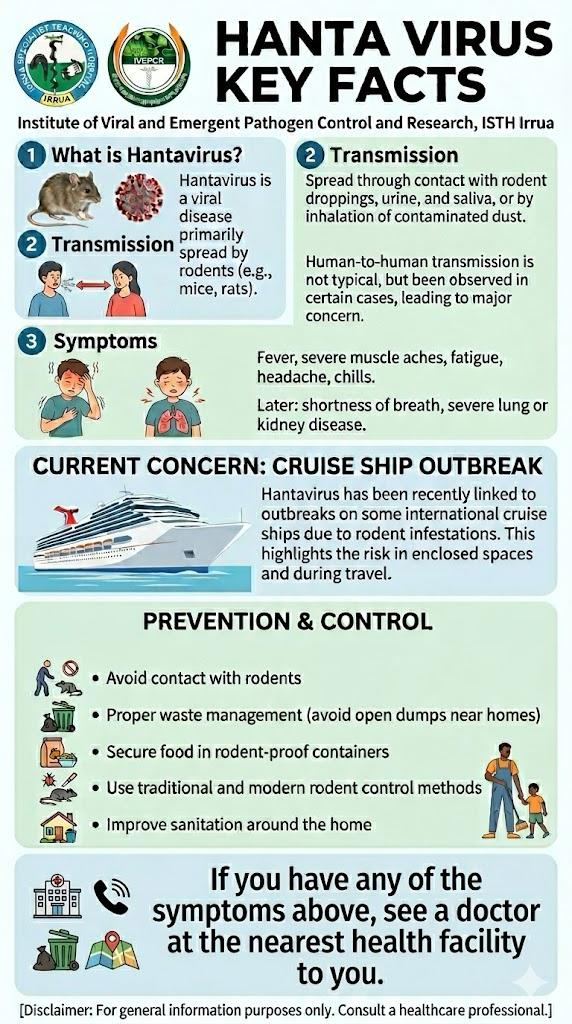
The Institute of Viral and Emergent Pathogens Control and Research (IVEPCR), Irrua Specialist Teaching Hospital, wishes to draw the attention of healthcare workers, diagnostic laboratories, public health authorities, researchers and the general public to the growing global attention on hantaviruses and the need for heightened preparedness and surveillance activities.
Hantaviruses are rodent-borne viruses capable of causing severe human disease, including Hantavirus Pulmonary Syndrome (HPS) and Hemorrhagic Fever with Renal Syndrome (HFRS). Human infection occurs mainly through inhalation of aerosols contaminated with infected rodent urine, droppings or saliva. Although cases are uncommon in many regions, the public health importance of these viruses remains significant due to their potential severity and fatality.
IVEPCR has noted increasing international scientific discussions regarding the capacity of some currently available molecular assays to reliably detect certain hantavirus strains, including the Andes viruses. In view of this, several international diagnostic and research centres are undertaking collaborative validation and preparedness activities to ensure robustness of detection systems and strengthen laboratory confidence.
As part of ongoing global scientific collaboration, IVEPCR is actively engaging with partner institutions through molecular reference support, technical collaboration and exchange of control materials to support preparedness for emerging viral threats.
The Institute therefore advises the following:
- Healthcare facilities should maintain vigilance for unusual febrile illnesses, respiratory syndromes and hemorrhagic presentations, especially in patients with relevant environmental or travel exposure histories.
- Diagnostic laboratories should continue strengthening biosafety practices, molecular testing capacity and quality assurance systems for emerging pathogens.
- Public health agencies should sustain integrated disease surveillance and encourage prompt reporting of suspected unusual outbreaks or clusters of illness.
- Communities are advised to promote environmental sanitation and rodent control measures in homes, farms, food storage areas and workplaces.
- Researchers and collaborating institutions should continue supporting genomic surveillance, laboratory preparedness and international scientific cooperation on emerging infectious diseases.
IVEPCR reassures the public that there is currently no cause for panic. However, continued vigilance, scientific collaboration and preparedness remain essential components of global health security.
The Institute remains committed to advancing diagnostics, surveillance, outbreak response, research and capacity development for emerging and re-emerging infectious diseases in Nigeria and beyond.
Signed
Dr Joseph Okoeguale
Director, Institute of Viral and Emergent Pathogens Control and Research (IVEPCR)
Irrua Specialist Teaching Hospital (ISTH)
Irrua, Edo State, Nigeria
For Chief Medical Director, Prof R. A Eifediyi